

VisionCheck AI: Industrial AI Inspection rooted in experience.
As an intelligent extension of your existing NELA inspection system, VisionCheck AI detects more subtle and more varied defect patterns. This is made possible by decades of inspection experience, in-house sensor expertise and proven inspection machine engineering.
- Fast: Fast teach-in processes for new components and variants.
- Simple: Intuitive operation with no programming skills required.
- Precise: Detects even defect patterns that are difficult for conventional systems to identify.
When Rule-Based Inspection Reaches Its Limits.
Established automated image processing already delivers a great deal today, but reaches its limits where:
- Variant diversity increases: every new product version requires complex re-parameterization.
- Defect patterns become more subtle: fine scratches, cracks or low-contrast defects do not fit into rigid rule sets.
- Pseudo-rejects increase: resulting in rework and scrap in the production line. Pure anomaly detection without classification provides a finding, but not a solution.
- Tolerance windows can hardly be narrowed enough without losing good parts in the process.
Prevention Instead of Reaction: What the Next Level of Component Inspection Needs to Deliver.
-
Standardizable, flexible and scalable inspection processes.
-
Consistent objectivity, even with complex or new defect patterns.
-
100% documentation and traceability.
-
Early defect detection instead of downstream complaints.


The Solution: VisionCheck AI
VisionCheck AI purposefully enhances our conventional image processing with a powerful AI component as an intelligent upgrade wherever flexibility and precision are required. What others present as a vision, we deliver as an integrated reality:
- Objective quality control
- Full transparency instead of black-box AI: you see what the AI sees and why it makes its decision.
- Real-time analysis directly on your system.
- Intuitive operation: self-service & no-code, with no programming skills required.
- Data sovereignty: hosted in Germany, GDPR-compliant.
- Scalable from pilot project to global rollout.
- Hardware-independent and retrofit-ready: suitable for use in existing systems, too.
- Elimination of pseudo-defects through a hybrid AI/rule-based approach.
The Difference: Expertise That Does Not Come from a Code Editor.
AI for industrial image processing is only the tip of the iceberg. For it to work reliably in production, it needs the foundation underneath — and this is exactly the foundation NELA has built over decades: as a machine builder, sensor technology specialist and image processing provider from a single source.
-
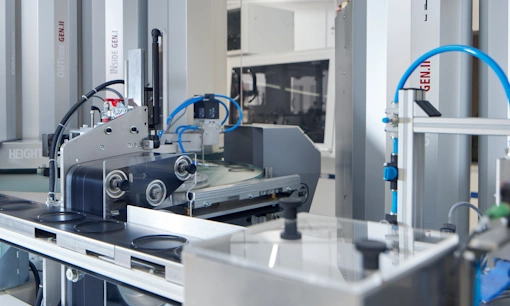
Decades of inspection experience built directly into the model.
What our application engineers have learned from thousands of real-world inspection tasks about materials, defect patterns and tolerances flows directly into our AI architectures and training strategies. The result: models that are faster to deploy, more robust and ready for production use.
-
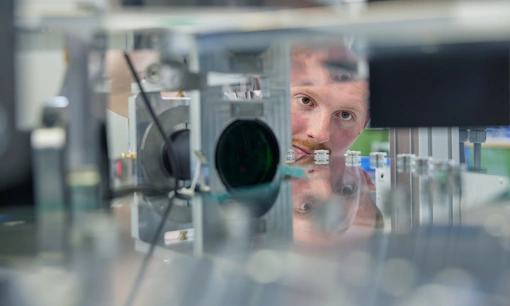
In-house sensor expertise as the basis for every detection task.
The better the image, the better the quality of the AI decisions. Our precisely matched lighting, optics and camera concepts generate exactly the image quality required to enable reliable detection in the first place.
-
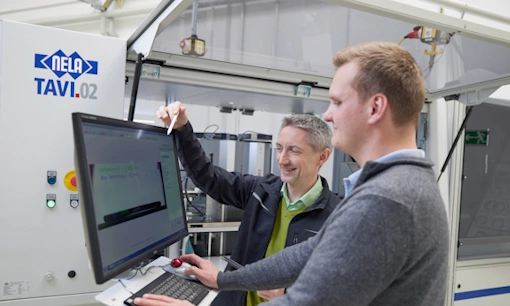
A seamless solution instead of a patchwork of components.
For inspection to truly work on the production line, it takes more than algorithms: robust mechanics, precise component handling, integrated control technology and experience in system integration. NELA delivers all of this from a single source. The result: AI, image acquisition and machine technology perfectly aligned.
AI-Powered Quality Inspection in three steps
With VisionCheck AI, you integrate AI into your existing inspection environment in a structured, controlled and efficient way. Without system disruption, without complex implementation, with no programming skills required.
1. Annotate
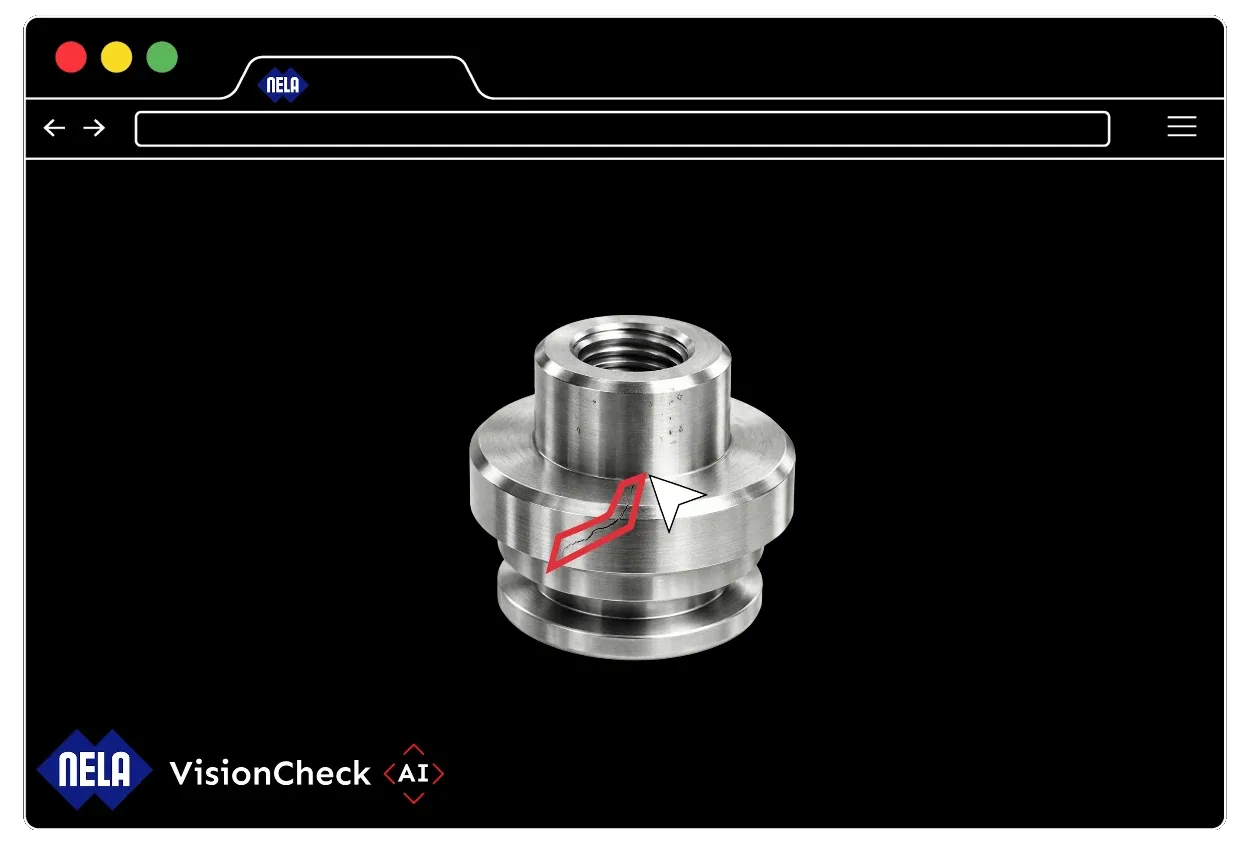
Upload images of good parts and defective parts, then mark the defects. VisionCheck AI automatically segments the defect areas.
2. Start training
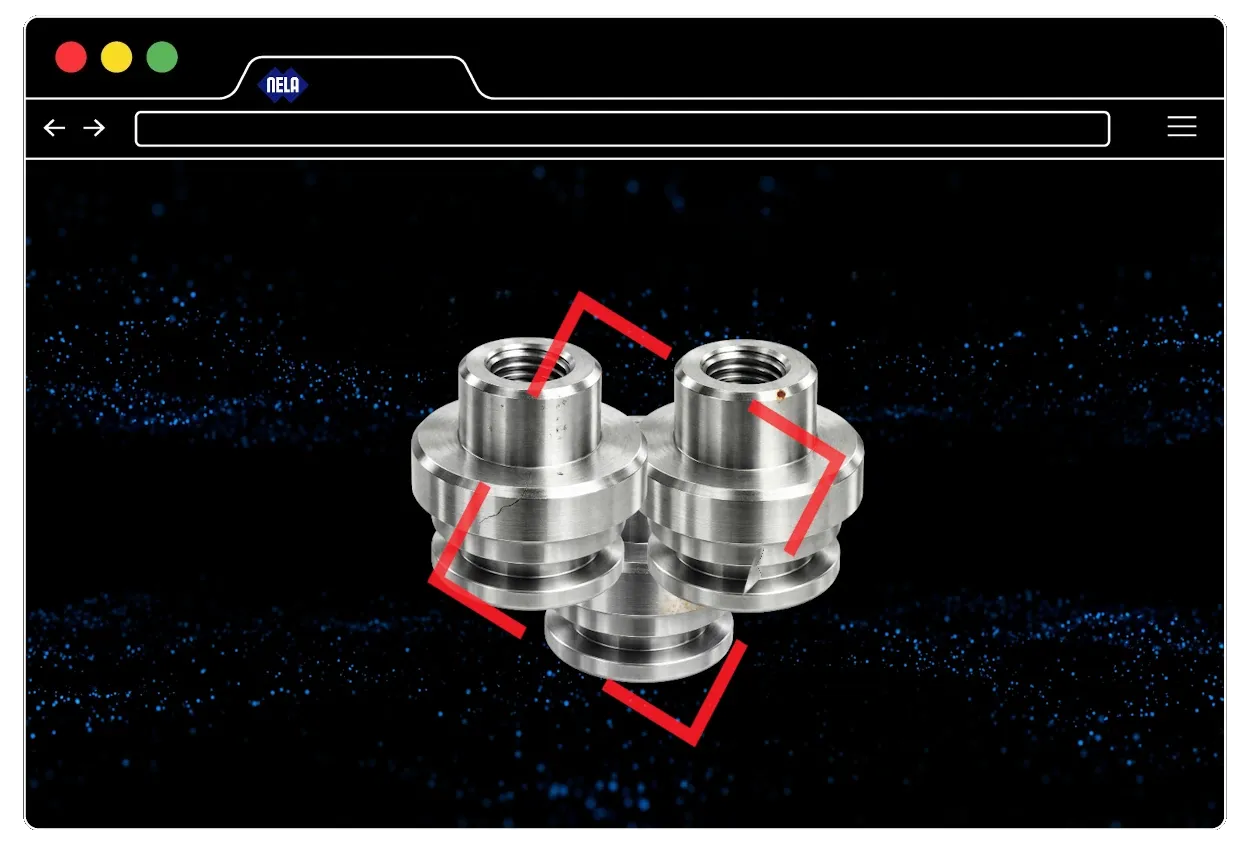
Start training with a single click in our GPU cluster in Germany. Thanks to intelligent data augmentation, around 20 images are often enough. A typical training run takes only a few minutes.
3. Run the model
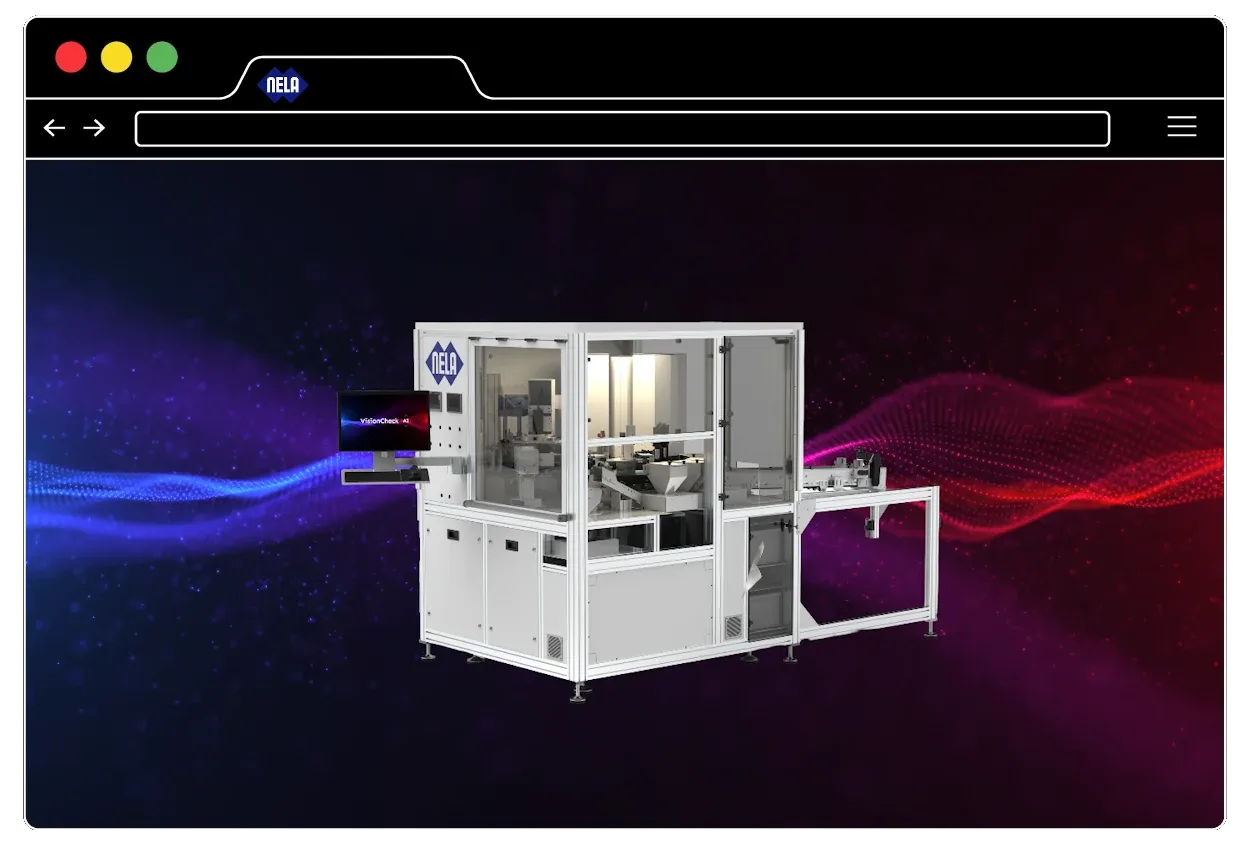
Download the model and transfer it to the system. Done. The AI runs directly in your NELA line and can be combined with conventional image processing at any time.
Maximum efficiency and reliability in quality inspection.
-
Massive time savings during setup
What takes conventional image processing several days, VisionCheck AI accomplishes in just a few minutes. New components and variants go into production in record time.
-

Detection of previously “invisible” defects
The finest scratches, cracks or low-contrast defects that rule-based systems cannot detect are reliably identified. This improves your outgoing quality and significantly reduces complaints.
-
Material- and geometry-independent
Glossy or matte, single-color or multicolored, simple or complex geometry: the AI handles material diversity and positional deviations with confidence.
-
Hybrid approach: AI plus conventional image processing
AI-based detections can be combined with our conventional measurement and inspection modules. This means defects are not only detected, but also precisely quantified, for example by minimum defect size, while geometric inspections run in parallel.
-
Suitable for use across industries
From metal processing and plastics technology to fuel cell components: the same platform, the same operating logic, the same precision.
Data Sovereignty & Security Made in Germany.
Your inspection data remains your data. Protected by a hybrid security concept based on German standards:
- Hosting in Germany in a GDPR-compliant data center.
- SSL-encrypted transmission and two-factor authentication (2FA).
- Isolated AI training on NVIDIA clusters at NELA, separated from the public network.
- Encrypted model storage to protect against unauthorized access.

FAQ
What is the main advantage of VisionCheck AI over conventional image processing?
Significantly faster setup and the detection of subtle defect features that are difficult for rule-based systems to identify. Complex inspection tasks that previously required extensive parameterization can now be taught in within a short time.
Which materials and geometries is the software suitable for?
For all materials, geometries and surface colors. Glossy or matte, simple or complex. As long as the defect is visible to the camera in some form, VisionCheck AI can learn to detect it.
Can different components be inspected with a single model?
Yes. Different parts, sizes or views can be combined in a single model. This makes VisionCheck AI ideal for product families.
What requirements do I need to meet?
An existing NELA inspection system with VisionCheck software. No additional local software installation is required.
How many images do I need for a stable model?
Around 20 images are often sufficient (OK + NOK). With approximately 100 images, the model becomes even more robust.
What is data augmentation and why is it important?
VisionCheck AI automatically generates numerous variants from just a few original images, for example through rotation or changes in sharpness. This turns small datasets into a robust, production-ready model.
How long does a training process take?
Usually only a few minutes. The exact time depends on the model and the number of images and is displayed as an estimated duration.
Can the AI also check dimensions?
For measurement tasks requiring proven measurement system capability, we deliberately rely on our conventional image processing. The AI is specialized in detecting surface defects and can be combined with conventional image processing for measurement tasks.