Infos für Sortierdienstleister
(pdf, 287.41 KB)

As an inspection and sorting service provider, you stand for uncompromising inspection quality for customers who accept no compromises. Our systems provide the foundation for this.
As an inspection and sorting service provider, you are the quality gatekeeper of the industry. With our inspection systems, you deliver on this promise reliably and cost-effectively. Up to 100,000 parts per hour, AI-assisted setup of new inspection tasks and comprehensive partner support. We provide the foundation for your contract inspection business.
As a contract inspection service provider, you carry a dual responsibility: your customers expect zero-defect deliveries, while you must also operate quickly, flexibly and cost-efficiently.
Setup times eat into margins
Every new component means programming effort, downtime and uncertainty – especially for short-notice orders.
Human error rates are not acceptable.
Visual, manual inspection is subjective, prone to fatigue and highly time-consuming in terms of documentation. A risk your customers do not accept.
Liability risk without complete documentation
If a customer identifies a defect, the question is: why was it not detected? Without verifiable inspection records, you are left without protection.
Our sorting systems are designed for the realities of contract service providers: varying parts, tight tolerances, high throughput and the requirement to fully document every batch.
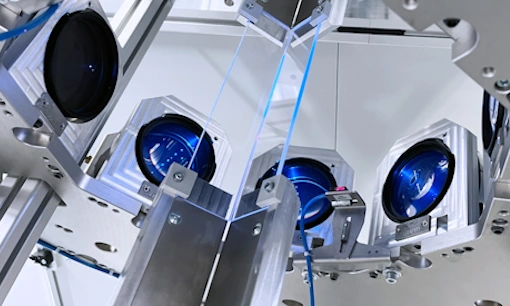
Sensors and lighting are developed and configured in-house at NELA. For maximum contrast for every part type, instead of compromise standard optics.
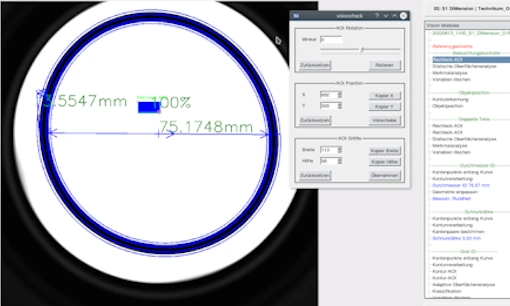
NELA VisionCheck.ai enables independent training of new components using image data. No programming skills required and no long waiting times.
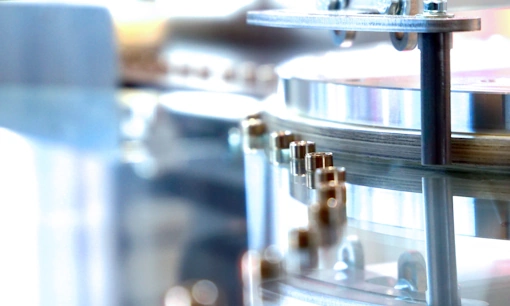
From infeed (vibratory bowl feeders, rotary tables, hopper systems) to sorting into OK/NOK or by classes, our machines provide a fully integrated and coordinated solution.
Depending on component geometry, material properties and inspection requirements, different NELA systems such as TAVI, ROVI or SKIVI are used.
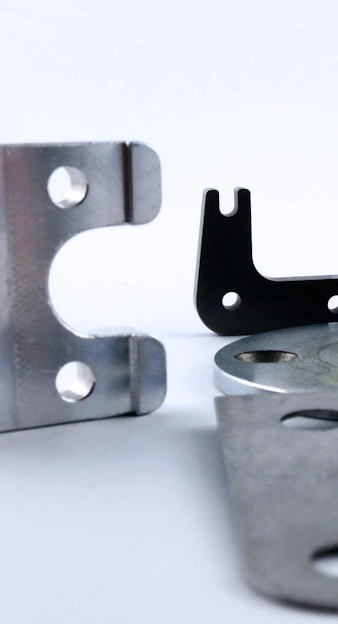
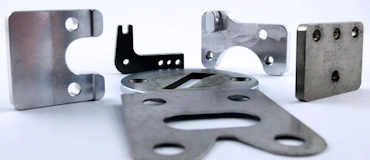
Reliably inspect precision in turning and milling processes.
In AOI, for example, diameters, lengths and bores are measured precisely to ensure the required dimensional accuracy. In addition, surface defects such as grooves, chatter marks or chip imprints are detected, which can affect both the function and the visual quality of the components.
Typical inspection objects:
Turned Parts Cylinders Metal Precision Parts
Detect material defects early and ensure reliable functionality.
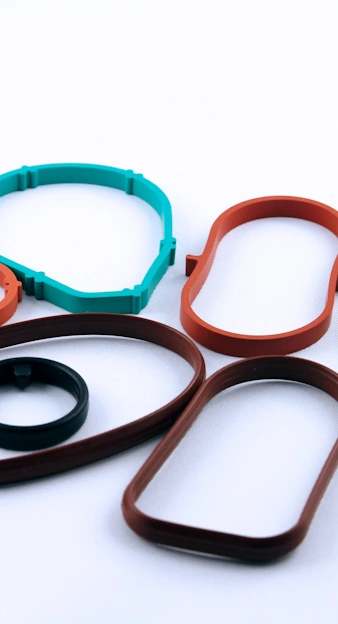
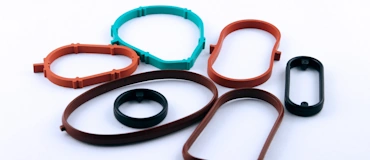
Optical inspection focuses on defects along parting and molding lines, particularly flash formation, notches or sink marks. In addition, cracks are detected, and flow lines, material inclusions as well as foreign material are identified to reliably ensure the functionality of the seal.
Typical inspection objects:
Seals Elastomer Functional Parts
Ensure geometric accuracy and structural integrity.
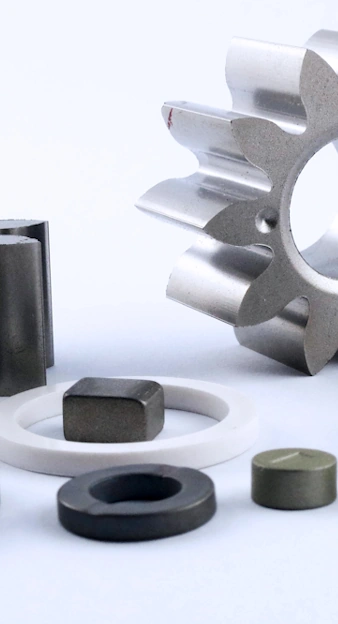
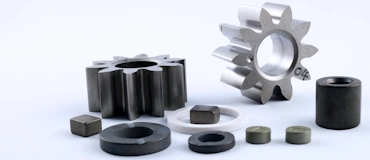
In the optical inspection process, the geometry and flatness of the components are checked to ensure proper fit and functionality. At the same time, topological defects such as shrinkage cavities, pores or edge chipping are detected, which can significantly impair the mechanical strength and service life of the parts.
Typical inspection objects:
Synchronizer Rings Gears
Verify functional reliability down to the smallest detail.
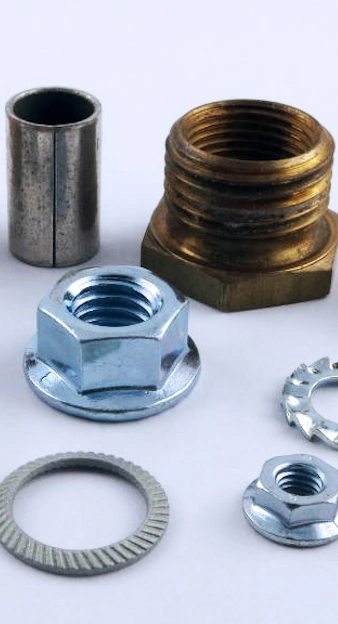
Inspection requirements include comprehensive thread inspection along the entire component length to reliably detect damage or form deviations. In addition, roundness and concentricity are measured at clamping and bearing points. For ball bearings, the completeness of all rolling elements is also inspected optically to prevent functional failures during later use.
Typical inspection objects:
Screws Threads Ball Bearings
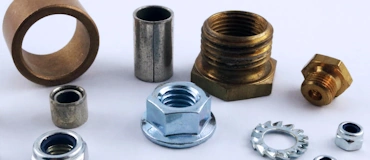
Handle and inspect challenging geometries reliably.
Optical inspection is carried out while taking specific requirements for part guidance into account. For objects with unstable positioning or complex geometries, we rely on specialized handling concepts that ensure precise positioning and reliable guidance. This enables safe and reproducible inspection even for components with minimal dimensions or a high variety of variants.
Typical inspection objects:
Micro parts with a high variety of variants