

Automatic Optical Geometry Inspection
Geometry inspection detects even the smallest deviations that are critical for function, safety and quality.
Precision down to the smallest detail.
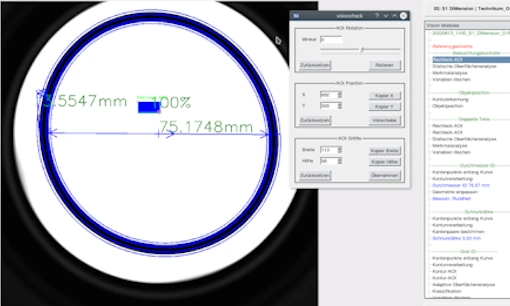
In geometry inspection, highly precise dimensional measurements of components are taken and reliably compared with the nominal values specified in technical drawings.
Highest measurement accuracy and process reliability: Measurement accuracies of up to ± 1 µm enable stable, reproducible results well within the drawing tolerances.
Maximum throughput and efficiency: Reliable geometry inspection of up to 100,000 parts per hour. Consistent, fatigue-free and without production interruptions.
Objective quality assurance and documentation: 100% inspection with automatic data capture, statistical evaluation and standards-compliant documentation of all measurement results.
Automated geometry inspection: Precision according to specification.
Dimensional deviations determine function and safety, regardless of how complex a component may be. Automated geometry inspection precisely captures relevant dimensions and directly compares them with the specifications defined in the technical drawing. The result is clear measurement data that reliably verifies quality in a reproducible manner and enables dependable evaluation of every single part.
Metal processing
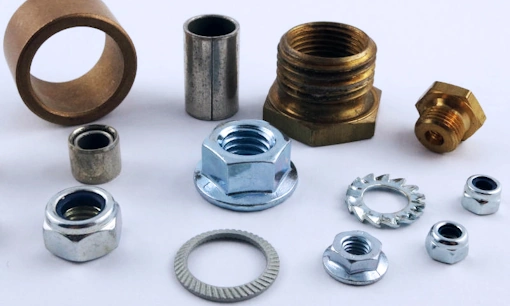
Precise measurement for turned, milled and stamped parts
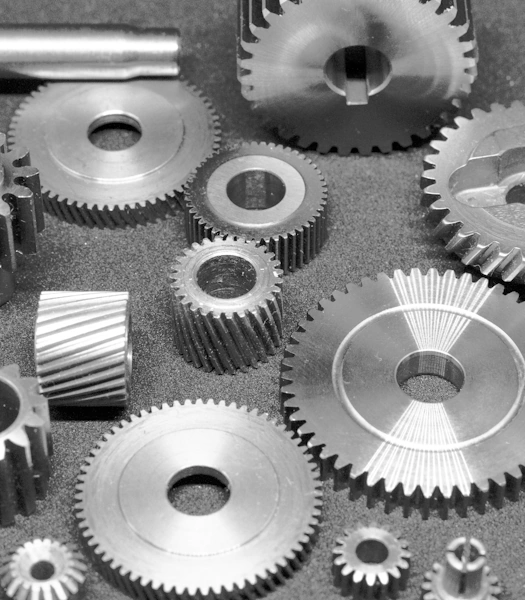
In metal processing, tight tolerances meet high production volumes. Geometry inspection ensures that turning, milling and stamping processes are reliably monitored and deviations are detected at an early stage.
Inner and outer diameters, radii, and form deviations
Inner and outer diameters, radii, as well as form deviations such as ovality or out-of-roundness are measured precisely and evaluated objectively, ensuring that even the smallest tolerance deviations are reliably detected.
Component height, length and material thickness
Component height, length and material thickness are captured without contact and continuously monitored to ensure consistent dimensional accuracy even at high production volumes.
Geometric tolerances (form and position)
Geometric tolerances such as flatness, perpendicularity, coaxiality, or complex contours are analyzed reproducibly to ensure that demanding drawing specifications are reliably met.
Function-critical dimensions
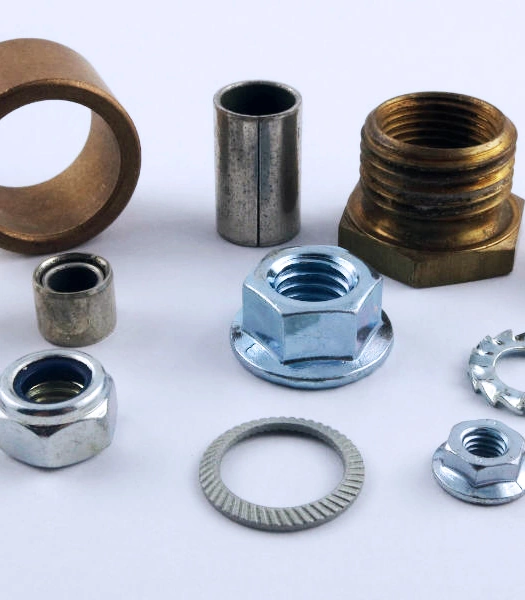
Function-critical dimensions on fastening elements are automatically inspected, generating clear measurement data that eliminates ambiguity and ensures assembly capability.
Elastomers
Geometry inspection for flexible materials
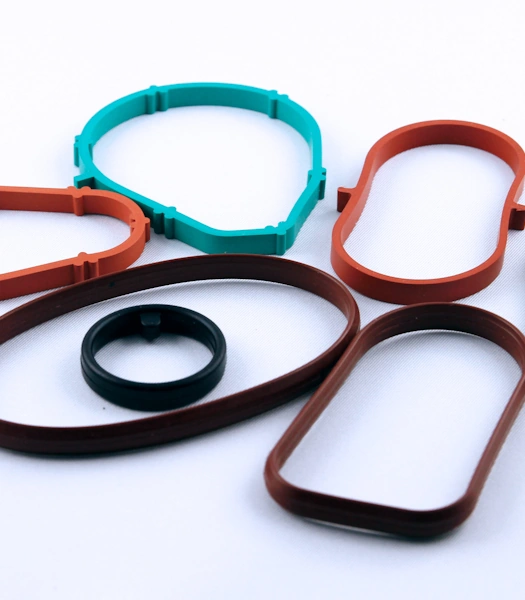
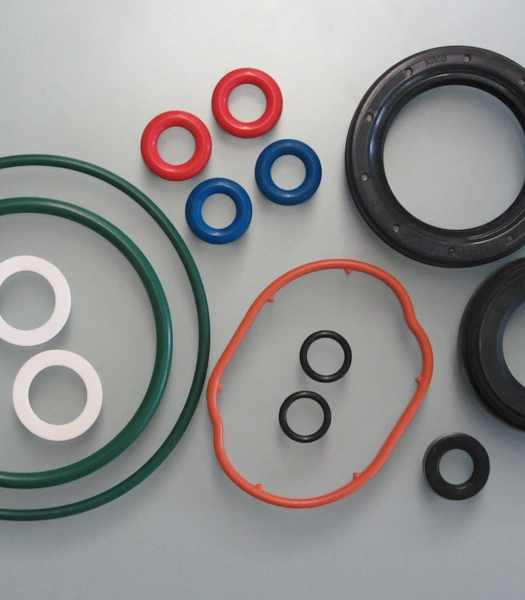
Elastomer components such as O-rings or seals are flexible, compliant and sensitive to handling and mechanical stress. Automated geometry inspection ensures that relevant dimensions are reliably captured despite these material properties and evaluated within the specified tolerances.
Inner and outer diameters
Inner and outer diameters as well as wall thickness and cross-section thickness are measured with high precision, as in elastomers these parameters directly determine the sealing performance and the component’s suitability for its intended application.
Component height and contours
Component height and contours are captured without contact to ensure reproducible measurement results even for soft or unstable parts.
Form deviations
Form deviations such as misalignment, irregular contours or deviations from the nominal geometry are reliably detected, even if the material deforms slightly during handling.
Plastics
Reliable geometry inspection for functional requirements
Plastic parts place specific demands on geometry inspection, as material properties such as transparency, reflectivity or flexibility can influence optical measurement. Automated geometry inspection precisely captures relevant dimensions and ensures that plastic series parts remain within defined tolerances.
Inner and outer diameters, geometric openings
Inner and outer diameters as well as geometric openings are reliably measured to ensure the dimensional fit and functionality of plastic components.
Component height, wall thickness and material thickness
Component height, wall thickness and material thickness are captured without contact, enabling reproducible inspection even for delicate or lightweight plastic parts.
Complex contours and form deviations
Complex contours and form deviations on injection-molded or precision-turned parts are analyzed with high precision, even in the case of demanding geometries or varying material properties.
Geometric tolerances
Geometric tolerances such as flatness, roundness, or concentricity are evaluated objectively to ensure dimensional accuracy and functional reliability in subsequent use.
Sintered parts
Geometry inspection for porous and brittle materials
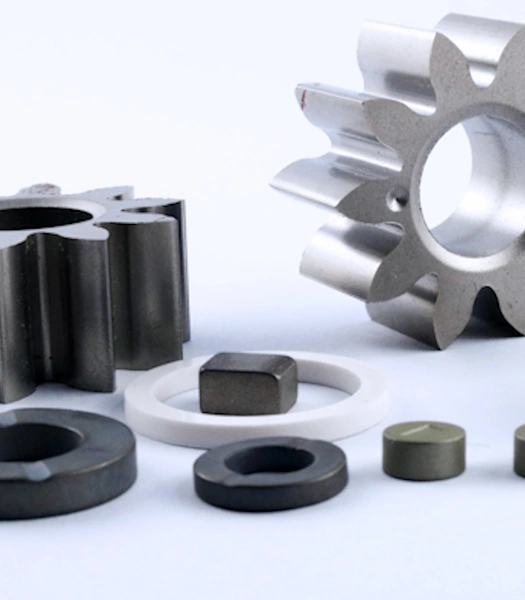
Geometry inspection of sintered parts enables reliable evaluation of critical dimensions and contours without misinterpreting permissible porosity as a defect. This prevents misclassification, unnecessary scrap and potential functional issues at a later stage.
Contours and topological features
Contours and topological features are measured reliably, even in complex-shaped sintered parts whose material structure requires a clear distinction between permissible porosity and geometric deviations.
Gentle handling and controlled sorting
Gentle handling and controlled sorting ensure that delicate sintered parts are not damaged during geometry inspection and remain reliably processed even at high production volumes.
Geometric deviations at edges and transitions
Geometric deviations at edges and transitions are reliably detected, enabling clear identification of form defects or impermissible changes in the component geometry.
Dimensional accuracy and key contour features
Dimensional accuracy and key contour features are precisely inspected to ensure that post-processed outer surfaces comply with the specifications defined in the technical drawing.
Electronic components & connectors
Dimensional accuracy for reliable connections
Geometry inspection ensures that electronic components are suitable for assembly and can be processed reliably in automated manufacturing processes.
Pins and connectors
Pins and connectors are precisely measured and checked for correct positioning to ensure a reliable mechanical and electrical connection within the assembly.
Assembled printed circuit boards
Assembled printed circuit boards are geometrically inspected to verify the completeness and correct placement of components before they are transferred to downstream processes or assemblies.
Micro-components
Micro-components such as fine screws or small turned parts are reliably detected, even at very small dimensions where handling and measurement place particular demands on the process.
Complex geometries and hybrid materials
Complex geometries and hybrid materials are analyzed from multiple views, enabling reliable evaluation of features such as coaxiality or concentricity even on combined material surfaces.

Typical inspection characteristics in geometry inspection
Our systems reliably capture geometric characteristics within the production flow, providing a solid basis for decision-making without slowing down the process.
Precise measurement for consistent quality
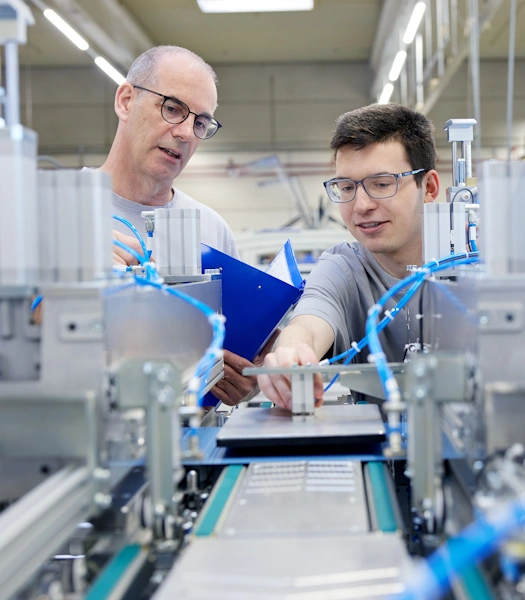
Manual measurements and sampling are no longer sufficient given today’s tolerances, production volumes and liability requirements. Automated geometry inspection is therefore not merely a technical measure, but a strategic decision for stable processes, reliable quality and long-term trust.
-
100% inspection and process reliability
Geometry allows no exceptions.
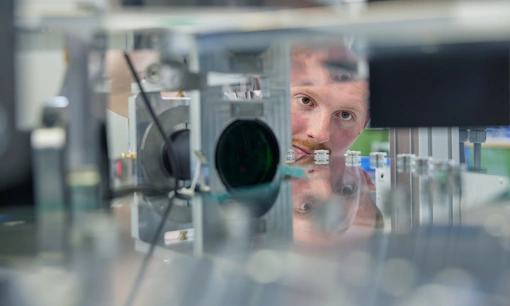
Every component is measured completely, objectively and reproducibly. Automated geometry inspection systems from NELA eliminate human factors and ensure that only dimensionally accurate parts proceed to the next stage of the process. This reduces the number of non-compliant parts that pass as good, prevents downstream damage and creates true process reliability.
-
Cost efficiency without compromising tolerances
Precision that pays off.
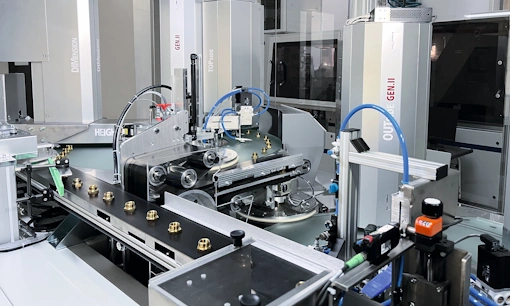
High throughput, short cycle times and stable measurement results ensure that geometry inspection remains cost-efficient even under demanding requirements. False rejects are minimized, rework is avoided and material is used efficiently.
-
Verifiable quality, reliable decisions
Measure instead of guessing. Know instead of hoping.
All measurement results are automatically documented and remain fully traceable at all times. Geometry inspection provides reliable data both for internal process optimization and for audits, customer requirements and compliance with standards. Quality becomes measurable and verifiable.
-
Protection for brand, product & end users
Avoid errors and their consequences.
Geometric deviations are often invisible, yet their consequences can be severe. Automated geometry inspection detects critical deviations at an early stage and prevents defective components from entering assemblies or end products. This protects not only functionality and users, but also brand reputation and trust.

Our technologies for precise geometry inspection
Depending on the component, material and tolerance requirements, we use specialized measurement and sensor technologies. They are specifically designed to reliably and reproducibly verify dimensional measurements against technical drawings under real production conditions.
-
Laser triangulation
Determination of height, depth and profile using projected laser lines. Enables precise assessment of geometry even for demanding contours.
-
Telecentric precision optics
Distortion-free imaging of edges and silhouettes using parallel incident light.
-
Coaxial illumination
Uniform, low-reflection illumination, enabling edges and geometric features to be detected with high contrast and high measurement accuracy.
-
Integrated complementary methods
Resonance cavity and eddy current testing complement geometry inspection wherever material properties or internal structures are relevant for dimensional accuracy.

The right system for precise geometry inspection
Whether tight tolerances, high production volumes or complex component geometries: We develop modular geometry inspection systems that reliably integrate precise measurement into existing production processes.
-
 More about TAVI
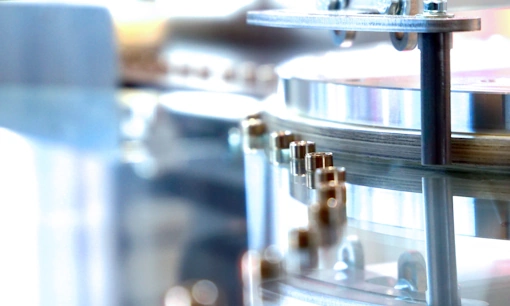
Glass Table System (TAVI)
Ideal when you have very high inspection requirements and want to inspect extremely stably and at very high speed.
-
 More about SKIVI
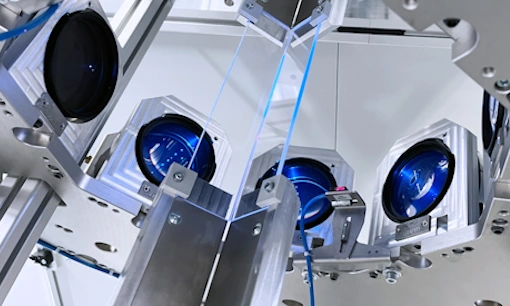
Glass Slide System (SKIVI)
Ideal for the optical inspection of elongated, cylindrical series parts that must be inspected continuously and sorted reliably.
-
 More about ROVI
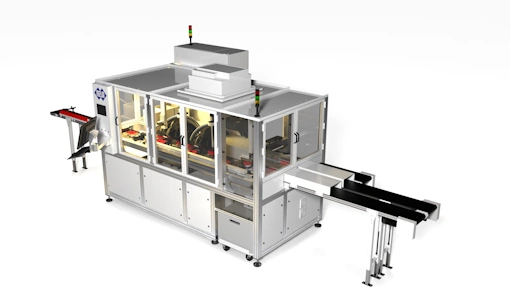
Indexed Systems, Handling Systems (ROVI)
For complex parts, particularly demanding inspection points or situations where the component must be precisely positioned or even deformed (e.g. elastic parts).
-
 More about Smart Sensor Technology
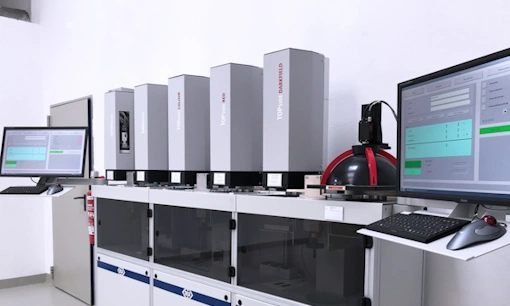
Smart Sensor Technology
The compact sensor units consisting of a camera and coordinated lighting can be integrated into your system via common standard interfaces and provide immediately usable inspection results.
-
 More about VisionCheck
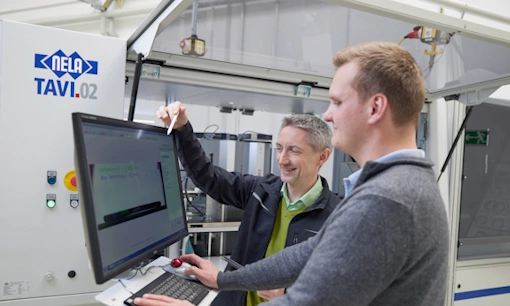
VisionCheck Software
VisionCheck enables the creation of customized inspection programs, reduces false rejects through adaptive surface algorithms and integrates seamlessly into existing optical inspection systems.
-
 More about VisionCheck.AI
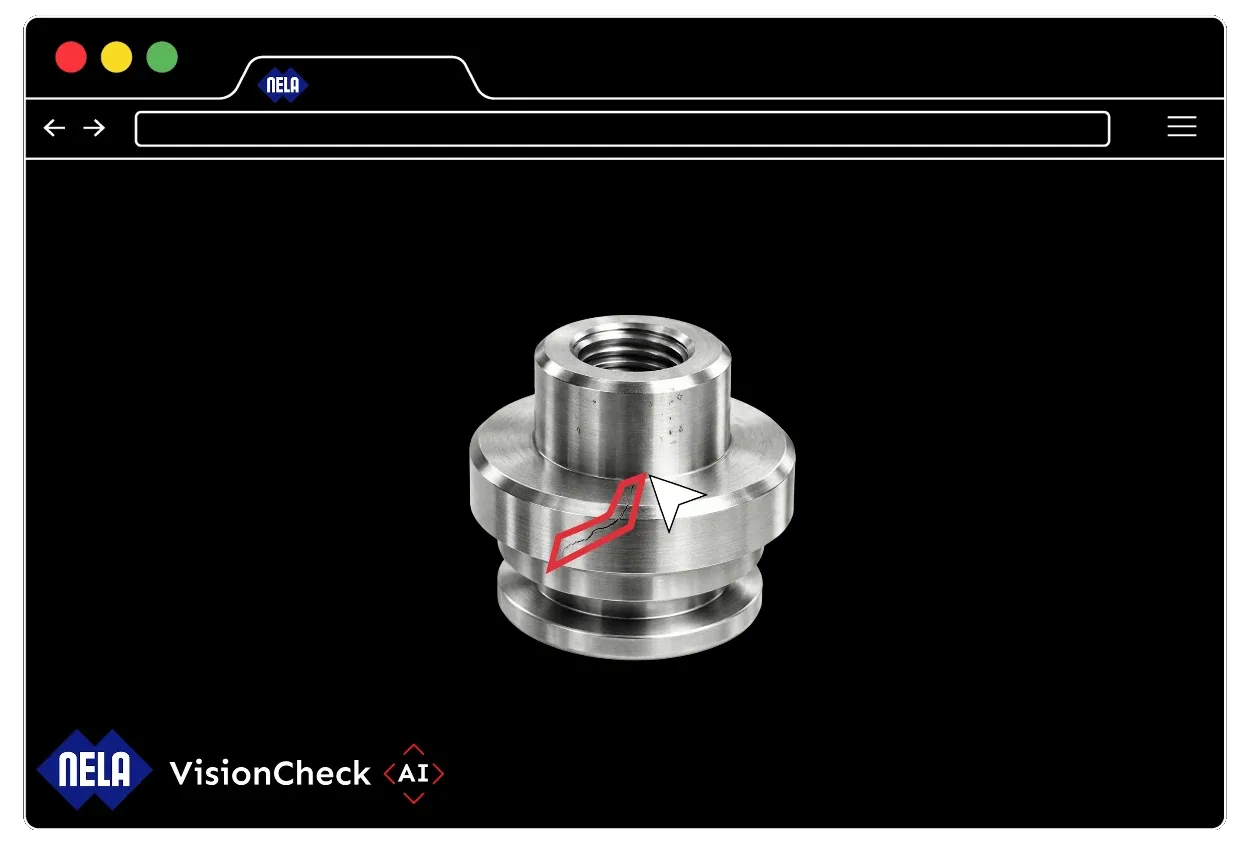
VisionCheck.AI
VisionCheck.AI extends traditional machine vision with a powerful AI component, reliably detecting even the subtlest defects – and trainable for new parts with no coding required.
